
Is HGTV Pricing Actually Realistic? What Dayton Homeowners Need to Know
If you have ever sat down to watch a Property Brothers episode and thought “wait, they did a whole kitchen for how much?” — you are not alone. And you are not wrong to be skeptical.
HGTV is genuinely entertaining, and we mean that sincerely. The design inspiration is real, the transformations are dramatic, and if you want to spend a Sunday afternoon watching Jonathan and Drew Scott turn a dated split-level into something beautiful, we completely understand. We have done it ourselves.
But when homeowners in Centerville, Oakwood, or Kettering sit down with us and reference an HGTV budget as a benchmark for what their remodel should cost, we have a conversation that is worth having in public — because the gap between what you see on television and what remodeling actually costs in the real world is significant, and it is not your fault for not knowing why.
The Short Answer: No, HGTV Pricing Is Not Realistic
The renovation budgets shown on HGTV programs — whether it is Fixer Upper, Property Brothers, Love It or List It, or Christina on the Coast — do not represent what a comparable remodel would cost a regular homeowner hiring a professional remodeling company without a production crew involved. Industry analysts estimate that HGTV renovation budgets understate real-world costs by 40 to 100 percent. In some cases, even more.
Here is why, and it is not because HGTV is being dishonest exactly. It is because the economics of a televised renovation are structurally different from the economics of the project you are planning.
Why HGTV Budgets Cannot Be Compared to Real-World Costs
1. Manufacturers donate materials in exchange for product placement
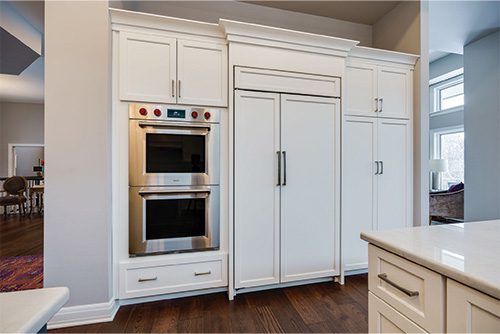
This is the biggest factor that never gets mentioned on screen. When you watch a $60,000 kitchen remodel on television and see gorgeous natural stone countertops, high-end appliances, custom cabinetry, and premium tile, a substantial portion of those materials were provided free or at deep discount by manufacturers in exchange for on-air exposure.
A suite of kitchen appliances from a premium brand can cost $20,000 to $40,000 or more at retail. If that same appliance package is gifted to the production in exchange for a prominent on-screen mention, the budget number quoted on the show is not actually covering those appliances. But the viewer at home has no way of knowing that. They see a finished kitchen and a budget number, and they assume the number paid for everything they are looking at.
As one industry professional put it plainly: if a contractor, a designer, and quality materials are all involved in a kitchen remodel, you cannot do it for $50,000 anymore, and you certainly could not when the appliances alone would cost that much at retail pricing.
2. Labor is often discounted, donated, or accelerated by large contracted crews
On a televised renovation, contractors frequently work at reduced rates or for free in exchange for the promotional exposure of appearing on a major network. Beyond the rate question, productions also deploy far more workers simultaneously than a standard residential remodeling project — running multiple crews in parallel to compress a six-week construction timeline into something that fits a television episode.
In the real world, accelerated timelines cost money. If you want a crew working nights and weekends to compress a 10-week kitchen remodel into four weeks, that is not a cost savings it is a significant premium. On television, that premium is absorbed by the production.
3. Permits and inspections are never discussed
Permitted remodeling work — which includes virtually any kitchen or bathroom project involving electrical, plumbing, or structural changes — requires building permits, inspections, and in some cases engineering review. These are real costs that add up. In a Dayton-area kitchen remodel involving structural changes and full mechanical rough-in, permit costs alone can run several thousand dollars. On television, this line item simply does not exist in the budget conversation.
4. Homeowners are actually paying much more than what appears on screen
There is a common misconception that HGTV homeowners are getting free renovations. In most cases, that is not true. Homeowners fund their own renovations. They are simply getting more for their dollar than they would in the real world, because of the donated materials, reduced labor, and production support that fills the gap between what is shown and what is real.
Property Brothers: Forever Home recently acknowledged in a casting call that pre-pandemic projects averaging $100,000 to $175,000 were running $200,000 to $250,000 post-pandemic, and their minimum homeowner budget requirement has moved accordingly to $150,000 or more. That is closer to reality. But that context rarely makes it onto the screen alongside the reveal.
6. Regional costs vary enormously
HGTV productions are concentrated in markets like Nashville, Los Angeles, and the Pacific Northwest. Markets where purchase prices and contractor costs are structured very differently than Dayton, Ohio. National averages and television budgets reflect production contexts and markets that may not map cleanly to what your remodel will cost in Centerville or Oakwood.
The Side-by-Side Reality
| What You See on HGTV | What’s Actually Happening | Real-World Impact |
| “$60K kitchen remodel” | Materials partially or fully donated by manufacturers | Actual retail cost of same kitchen: $120K–$200K+ |
| Renovation done in 2 weeks | Large contracted crews running in parallel + production schedule compression | Real timeline for comparable scope: 8–12 weeks |
| No mention of design fees | Professional designer on set; cost absorbed by production | Real design fees: 2–10% of project value depending on firm |
| No permit discussion | Permits pulled behind scenes; costs absorbed or omitted from quoted budget | Real permit costs: $1,000–$5,000+ depending on scope |
| Contractor working on camera | Reduced or donated labor rate in exchange for TV exposure | Real labor at market rate adds 20–40% to costs shown |
| “Property Brothers: budget $150K” | Minimum homeowner budget requirement post-pandemic | Closer to real — but materials still partially donated |
What This Means for Your Dayton Remodel
We are not sharing this to discourage you from remodeling. Quite the opposite. We share it because the worst remodeling experiences we see start with a budget expectation that was built on television math rather than real-world math. When a homeowner comes into a consultation expecting a full kitchen remodel for $60,000 because that is what they saw on television, the resulting conversation is painful for everyone.
The best remodeling experiences start with honest numbers. Here is what our real project data shows for Dayton-area homeowners:
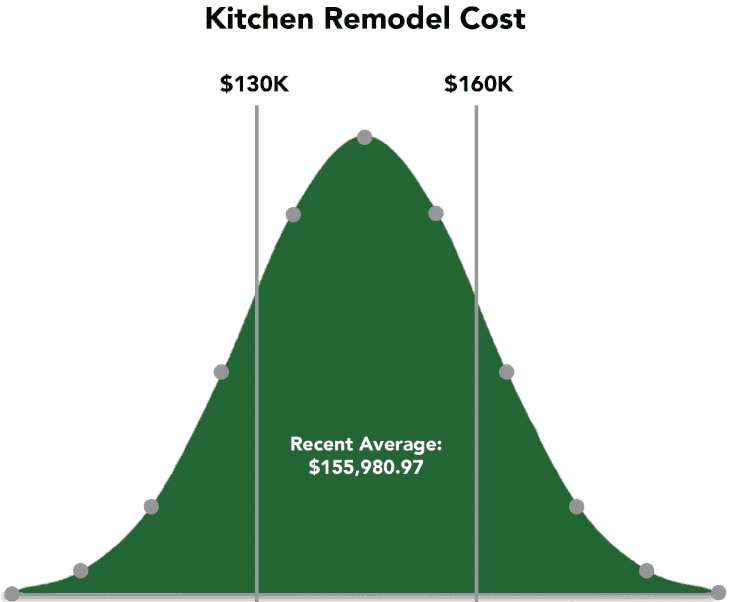
| Real Zengel Group Project Data — Kitchen Remodels Average kitchen remodel investment: approximately $155,000 Typical range: $100,000 to $220,000 depending on size, scope, and layout changes Entry-level full kitchen remodel (semi-custom, modest layout): $100,000–$140,000 Mid-range kitchen (some wall changes, upgraded finishes): $140,000–$180,000 Premium/custom kitchen (significant reconfiguration, high-end appliances): $180,000–$250,000+ These are actual project numbers from our completed Dayton-area work — not national averages, not TV budgets. |
| Real Zengel Group Project Data — Bathroom Remodels Average primary bathroom remodel: approximately $103,000 Primary suite bathrooms: $100,000–$154,000 Full bathroom remodels: $77,000–$120,000 Guest bath or secondary bath refresh: $35,000–$50,000 |
What HGTV Does Actually Get Right
In the spirit of fairness — and because we genuinely enjoy these shows — here is what HGTV gets right that is worth taking seriously:
- Design inspiration is real. The color palettes, layout ideas, material combinations, and design concepts shown on HGTV are genuinely useful starting points. We encourage our clients to use Pinterest and HGTV for inspiration gathering. Just do not use the budget numbers as your guide.
- Renovation sequencing is accurate. Shows like Property Brothers consistently show the correct order of operations — structural work before mechanical, mechanical before finishes, finishes before furnishings. This is how professional remodeling actually works.
- The value of professional design is demonstrated. Every HGTV show implicitly makes the case that a professional designer produces a better outcome than a homeowner going it alone. That is true. The design process matters enormously, and having a design-build team who has done this hundreds of times is worth the investment.
- Unexpected conditions are real. The obligatory “uh oh, we found something in the walls” moment on every renovation show is accurate — even if the resolution always happens conveniently before the commercial break. Older Dayton homes do reveal surprises. Building a realistic contingency into your budget is genuinely good advice, even if the shows undersell how significant those surprises can be.
A Note on What Has Changed Since the Pandemic
Even if HGTV budgets were closer to accurate in 2015 or 2018, the construction cost landscape has shifted substantially since then. Material costs increased significantly during and after the pandemic due to supply chain disruptions. Labor costs have risen as skilled tradespeople have become harder to find and retain. Permit and inspection timelines have stretched in many jurisdictions. A renovation budget that felt right five years ago may need to be revised materially upward for a project starting today.
This is something we see directly in our own project data. The homeowners we work with who did their initial budget research a few years ago and are now starting their project often find that they need to have a recalibration conversation before we can move forward productively. That conversation is better to have early than mid-project.
How to Use HGTV Productively in Your Planning
Our honest recommendation for how to engage with HGTV content as you plan your remodel:
- Watch for design ideas, not budget benchmarks. Screenshot the layouts, the cabinet styles, the countertop combinations, and the lighting choices that speak to you. Bring those to your first consultation. That is genuinely useful.
- Note the elements you love most. Is it the open floor plan? The island? The specific tile pattern in the primary bath? Identifying your priorities helps your design team understand where your investment should be concentrated.
- Ignore the dollar figures and the timelines entirely. Do not calculate backwards from an HGTV budget number to decide what is realistic for your project. Those numbers do not reflect what you will pay.
- Ask a professional for a realistic range early. Before you fall in love with a full scope, have a candid conversation with a remodeling professional about what your goals might realistically cost. At Zengel Group, we do this in our initial consultation — before you spend any money with us — so you have honest information to make good decisions.
- Use it as motivation, not a manual. The shows are best understood as aspirational entertainment. They can absolutely motivate you to finally take the leap on the kitchen you have been putting off for a decade. Just make sure your budget is built on real numbers, not television numbers.
The Bottom Line
HGTV makes great television. It is not, however, a reliable guide to what your Dayton home remodel will cost. The gap between what you see on screen and what a professional remodeling company will quote you is real, significant, and explained entirely by the structural economics of how television renovations are produced — donated materials, reduced labor, absorbed design and permit costs, and parallel crew deployments that compress timelines artificially.
The best thing you can do as a homeowner is walk into your first contractor conversation with curiosity rather than a pre-formed budget built from a show you love. Ask questions. Share your wish list. Be honest about what you can invest. A good remodeling partner — one who has done this in your specific market, in homes like yours — will give you a realistic picture of what is possible within your investment range, and help you make smart decisions about where to put your dollars.
That is what we do. And we are happy to have that conversation with you.
| Ready for a Real Conversation About Your Remodeling Budget? No TV math, just honest numbers based on actual Dayton projects. Call (937) 242-6096 or submit a contact form to schedule your consultation. |